Electric cars in India Models, charging stations & EV rental in Trivandrum

Discover popular electric cars, understand EV battery range and charging, and find charging stations across Kerala. Explore the latest EV models and enquire about electric car rental in Trivandrum.

Prefer to talk? Call +91 944 779 5539

Models profiled
18electric models profiled, 7 brands
Charging platforms
6Kerala charging platforms linked
In our fleet
2EVs in our rental fleet, including the Tata Nexon EV
Last reviewed
11/26last reviewed, 2 November 2026

Why choose an electric car

Seven differences you will actually notice

Electric cars are changing how people travel in India: better battery technology, smooth driving and a growing public charging network. Whether it is a city run, a family outing or a holiday across Kerala, an EV can feel quiet, smooth and modern. The real benefit depends on the car, your electricity tariff, how you drive and where you can charge.

  1. 01

    Lower running costs

    An EV can cost less per kilometre than a comparable petrol or diesel car, especially when charged at an economical home or workplace tariff. Public fast charging may cost more.

    Depends on: efficiency, charging losses, tariff, operator charges.

  2. 02

    Smooth and quiet

    An electric motor delivers power smoothly, with strong torque from a standstill. EVs are generally quieter than engine cars, especially at low speed.

  3. 03

    No tailpipe emissions

    Battery electric cars produce no exhaust while driving.

    Overall footprint still depends on electricity generation, battery manufacturing and end-of-life treatment.

  4. 04

    Easy in city traffic

    Most battery electric cars use a single-speed transmission, so acceleration and stop-and-go driving are straightforward.

  5. 05

    Regenerative braking

    When the car slows, the motor recovers some energy and sends it back to the battery.

    Amount varies by car, regeneration level, battery state and road.

  6. 06

    Modern technology

    Many EVs offer connected features, digital displays, touchscreen infotainment, automatic climate control and driver-assistance systems. Features vary by model and variant.

  7. 07

    Less routine engine maintenance

    No engine oil changes, spark plugs or exhaust-system upkeep. Tyres, brakes, suspension, cabin filters, software and high-voltage components still need regular inspection by qualified technicians.

Popular electric cars available in India

18 electric models, described plainly

The Indian EV market now spans compact city cars, hatchbacks, sedans, crossovers, SUVs and family vehicles. Each card says what the car is, who it suits and what to check. We publish no range or battery figure we have not verified, so always confirm specifications on the manufacturer's page.

Tata Motors

A significant presence in India's electric passenger market, from compact cars to SUVs.

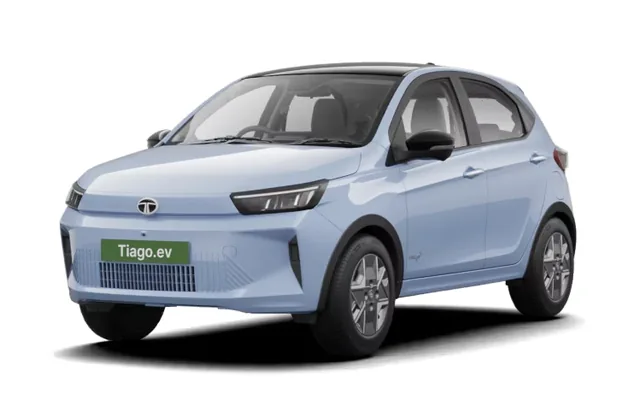
Tata Tiago EV electric hatchback
Tata Motors Market model

Tata Tiago EV

Electric hatchback

A compact electric hatchback built for urban mobility; its size suits city traffic, everyday commuting and tight parking.

Typical useCity commuting, couples and small families

What to check

Battery variant, certified range, AC charging capability, DC charging support where offered, rear-seat space and luggage capacity.

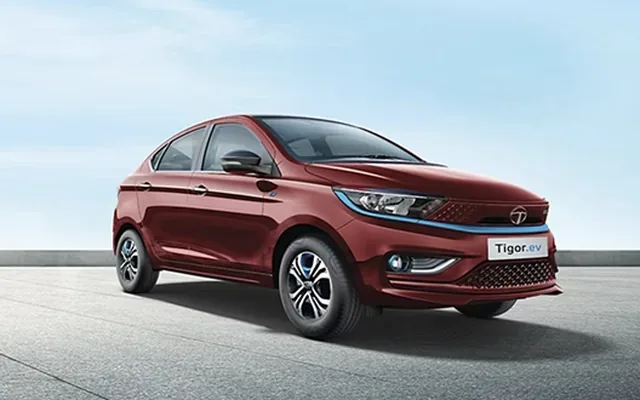
Tata Tigor EV electric sedan
Tata Motors Market model

Tata Tigor EV

Electric sedan

An electric sedan with a conventional three-box design, a separate boot and a sedan-style cabin.

Typical useCity commuting, business travel, buyers who prefer a sedan

What to check

Exact model year, battery specification, charging compatibility, boot capacity and current availability. Earlier fleet-oriented versions differ from other Tata EVs.

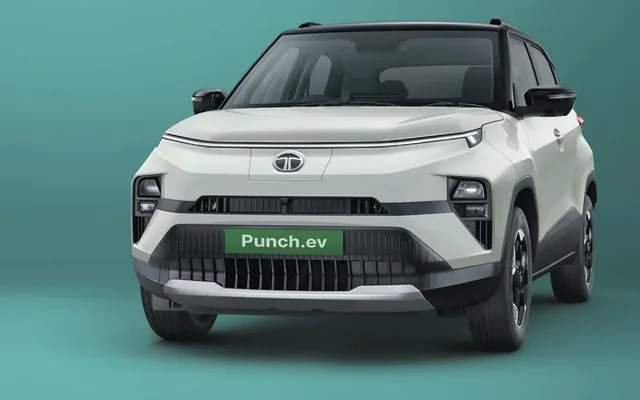
Tata Punch EV compact electric SUV
Tata Motors Market model

Tata Punch EV

Compact electric SUV

A compact electric SUV with an elevated seating position and practical dimensions, pairing city-friendly size with SUV styling.

Typical useSmall families, urban driving, weekend travel

What to check

Battery option, range, charging speed, ground clearance, boot space and safety equipment by variant.

Tata Nexon EV electric SUV, part of the Apple Car Rentals fleet
Tata Motors In our fleet

Tata Nexon EV

Electric SUV

An electric SUV for everyday family use, with a spacious cabin for its segment, SUV styling and a range of comfort and technology features.

Typical useFamily travel, city driving and planned intercity journeys

What to check

Model year, battery option, certified range, charging capability and actual battery condition. The Nexon EV name covers several versions, so quote the exact variant.

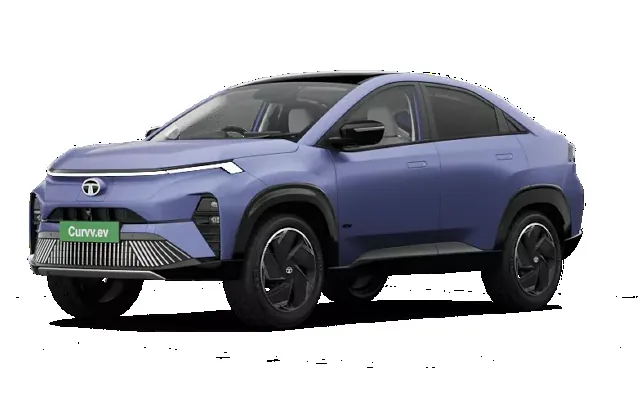
Tata Curvv EV electric SUV coupé
Tata Motors Market model

Tata Curvv EV

Electric SUV coupé

An SUV-coupé-inspired design with a modern cabin and an electric powertrain; SUV proportions under a sloping roofline.

Typical useFamilies who want distinctive styling in an electric SUV

What to check

Battery variant, certified range, rear-seat headroom, boot practicality, charging capability and variant features.

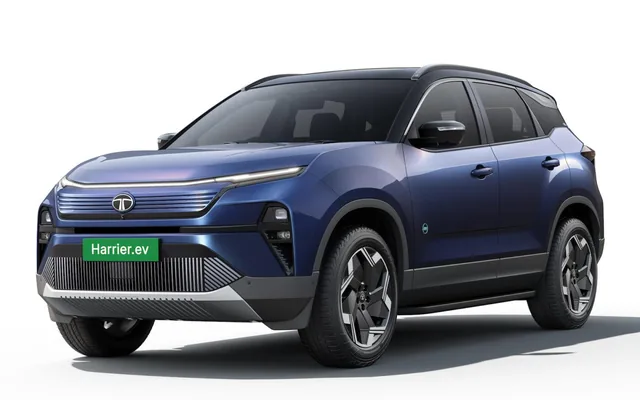
Tata Harrier EV premium electric SUV
Tata Motors Market model

Tata Harrier EV

Premium electric SUV

A larger, premium electric SUV with advanced features and strong electric performance. Some versions may offer all-wheel drive.

Typical useLarger families, premium travel, longer journeys with charging planned

What to check

Variant, drivetrain, battery specification, charging speed, vehicle dimensions, seating and luggage needs.

Mahindra

SUVs on dedicated electric architecture, with modern cabins and performance-minded powertrains.

Mahindra Market model

Mahindra XUV400 EV

Electric compact SUV

An electric SUV with a five-seat layout and a practical, family-oriented format.

Typical useFamily commuting, city use, planned intercity travel

What to check

Model year, battery variant, certified range, charging capability, boot space and current availability.

Mahindra Market model

Mahindra BE 6

Electric SUV

A modern electric SUV with distinctive styling, a technology-focused cabin and a dedicated electric platform.

Typical useDrivers who want a modern, technology-rich EV

What to check

Exact battery and drivetrain version, certified range, charging specifications, ADAS availability by variant and real-world efficiency.

MG Motor

Electric vehicles from compact city car to SUV and crossover.

MG Motor Market model

MG Comet EV

Compact electric city car

A small electric city car designed for urban travel; its footprint helps on congested roads and in tight parking.

Typical useSolo travellers, couples, short city trips

What to check

Two-door layout, passenger access, luggage capacity, range and charging arrangement. Best judged as a city car, not assumed right for every long journey.

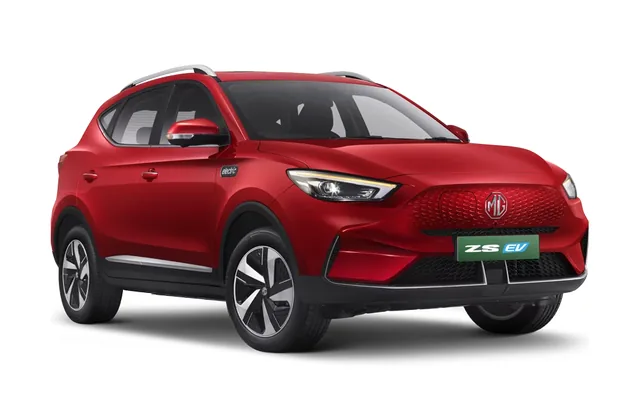
MG ZS EV electric SUV
MG Motor Market model

MG ZS EV

Electric SUV

An electric SUV with a family-oriented cabin, modern infotainment and connected features.

Typical useFamily travel, city driving, planned intercity journeys

What to check

Model year, battery specification, certified range, charging speed, boot space and available safety features.

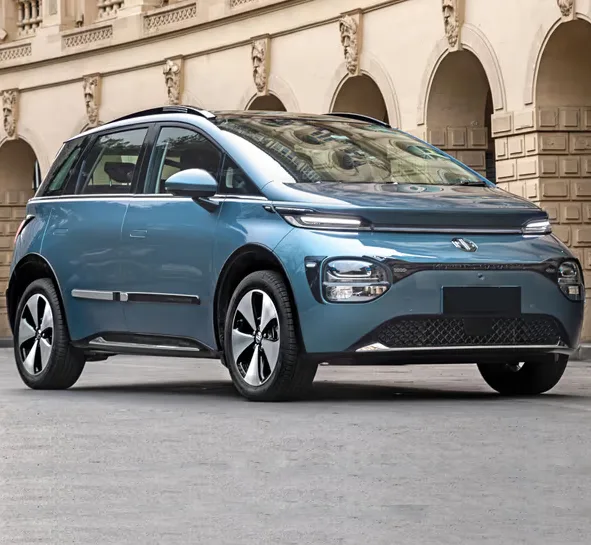
MG Windsor EV electric crossover, part of the Apple Car Rentals fleet
MG Motor In our fleet

MG Windsor EV

Electric crossover

An electric crossover designed around passenger comfort and cabin space, with a distinctive exterior.

Typical useFamilies, comfortable city travel, planned longer journeys

What to check

Battery arrangement, range, charging support, rear-seat comfort, boot capacity and the terms of any ownership or battery programme.

Hyundai

Family-oriented and premium electric models built on Hyundai's EV engineering.

Hyundai Market model

Hyundai Creta Electric

Electric family SUV

The familiar Creta SUV format in battery-electric form, with a modern cabin, multiple battery configurations and technology-focused equipment.

Typical useFamily commuting, city travel, planned intercity journeys

What to check

Battery option, certified range, charging specifications, variant equipment, boot capacity and passenger comfort.

Hyundai Market model

Hyundai IONIQ 5

Premium electric crossover

A premium crossover on a dedicated EV platform, known for distinctive design, a spacious cabin and advanced electric technology.

Typical usePremium travel and comfortable journeys

What to check

Exact variant, battery specification, charging capability, dimensions, ground clearance and access to compatible high-power chargers.

Kia

A three-row family EV plus premium electric crossovers and SUVs.

Kia Market model

Kia Carens Clavis EV

Three-row electric family vehicle

An electric family vehicle with three-row seating, relevant when you need extra passenger capacity.

Typical useLarger families and group travel

What to check

Exact seating configuration, passenger and luggage capacity with all rows in use, battery version, range and charging capability. A full seven-seat layout leaves less luggage space.

Kia Market model

Kia EV6

Premium electric crossover

A premium crossover with sporty design, advanced technology and performance-oriented powertrain options.

Typical usePremium travel, highway journeys, performance-minded driving

What to check

Drivetrain, battery variant, charging capability, wheel and tyre specification, luggage capacity and route charging options.

Kia Market model

Kia EV9

Large premium three-row electric SUV

A large premium electric SUV with a three-row cabin, focused on space, comfort and technology.

Typical useLarge families, premium group travel

What to check

Seating configuration, luggage capacity, dimensions, battery and drivetrain variant, charging speed and route suitability.

Maruti Suzuki

The company's entry into battery-electric SUVs.

Maruti Suzuki Market model

Maruti Suzuki e VITARA

Electric SUV

Maruti Suzuki's battery-electric SUV, with a modern design and battery options intended for everyday mobility.

Typical useFamilies, daily commuting, buyers curious about Maruti Suzuki's EV offer

What to check

Exact battery version, certified range, charging compatibility, variant equipment, dimensions and market availability.

Citroën

Electric hatchback / crossover-style option for urban use.

Citroën Name being verified

Citroën ë-C3

Electric hatchback / crossover-style

Citroën uses the ë-C3 name for its electric model. The "ë-C3 X" label is not shown as a separate model until Citroën confirms that exact designation for India.

Typical useUrban commuting and small-family mobility

What to check

Official model name, model year, battery capacity, certified range, charging connector and market availability.

Market guide, mostly not our fleet. Electric vehicle models shown on this page are examples of vehicles available in the Indian market. Apart from the 2 marked “In our fleet” (Tata Nexon EV and MG Windsor EV), they are not a representation of Apple Car Rentals' current rental fleet. Contact us to confirm the models currently available, rental rates and booking conditions.

Compare like with like

The spec sheet to ask for

Comparing EVs goes wrong when figures from different standards are mixed. Whichever model you look at, get these nine items from the manufacturer, labelled correctly, and note the date they were checked.

A charger's advertised power is not necessarily what the car will accept. If a figure cannot be verified, treat it as unknown rather than estimating.

Specification fields to compare when choosing an electric car
SeatingManufacturer-approved seating capacity.
Battery capacitySay whether the figure is gross or usable.
Certified rangeName the test standard (ARAI, WLTP, MIDC…). Never mix standards.
AC chargingSupported AC input power and connector.
DC chargingSupported DC connector and the maximum power the car accepts.
Charging timeCharger rating plus start and end battery percentage.
Drive typeFWD, RWD or AWD.
Boot capacityMeasurement standard and seating configuration.
AvailabilityCurrent market status and the date it was checked.

Battery capacity and range

What the numbers on the brochure mean

Two specifications matter most when you compare EVs: how much energy the battery holds, and how far that energy takes you.

Battery capacity (kWh)
The energy a battery can store, in kilowatt-hours. A bigger battery can support a longer range, but range also depends on efficiency, weight, aerodynamics, tyres, speed and conditions.
Gross vs usable
Gross is the battery's total nominal capacity; usable is the portion the car makes available for driving. Never compare one model's gross figure with another's usable figure.
Certified vs real-world range
Certified range is measured under a prescribed test, useful for comparing cars on common terms. It is not a promise for every trip.

What moves real-world range

  • Speed and acceleration
  • Air-conditioning
  • Passengers and luggage
  • Road surface and gradients
  • Traffic
  • Weather and temperature
  • Tyre pressure
  • Battery age and health
  • Driving mode and regeneration

Electric car charging, explained

Slow when parked, fast when travelling

Charging moves electrical energy into the traction battery. How long it takes depends on battery size and current charge, charger output, the car's own AC and DC limits, battery temperature and the supply at the station.

ACNormal charging
  • Common at homes, workplaces, hotels and public parking.
  • Suits a car that stays parked for several hours, such as overnight or destination charging.
  • The car's onboard charger converts AC for the battery, so speed depends on both the charge point and that onboard charger.
DCFast charging
  • Built to cut charging time on journeys; found at highway locations and commercial hubs.
  • Power depends on the charger's rating and the car's maximum DC input.
  • Speed varies with battery temperature and charge level, and usually slows as the battery nears full.

The car decides the speed

A charger advertised at 120 kW will not charge every compatible car at 120 kW. Drag both sliders to see why. This is an illustration, not a specific model.

The car is the limit: it accepts 50 kW, so a 120 kW charger delivers about 50 kW.

Connectors in India

CCS2Type 2

CCS2 is widely used for DC fast charging in modern EVs. Type 2 is common for AC. Some models and older cars use other arrangements: check the owner's manual and the charger listing.

Charging time

There is no single time for a whole model family. A proper figure states the battery variant, charger power, starting and ending percentage, and whether it is manufacturer-claimed or independently measured.

Charging cost

Cost = energy from grid (kWh) × tariff per kWh

Bills can also include session fees, parking, taxes and idle fees. Use the actual tariff and billing terms for the location.

EV charging stations in Kerala

Use live maps, not a list that goes stale

Kerala's public charging is run by government-linked bodies and private networks, and coverage, charger type, access rules and status vary by location. We link to the live sources instead of printing station lists that would be out of date.

KSEB

Public-sector charging infrastructure and updates

Before relying on any KSEB point, confirm the address, connector, power, hours and that it is operational.

Visit KSEB (KSEB, opens in a new tab)

A pin on a map is not a promise. A charger that appears on a map may be offline, restricted to a hotel or office, or the wrong connector. Never describe a proposed or sanctioned station as working, and verify before you rely on one.

How to find a charger

Find a charger with ChargeMOD

  1. Install the ChargeMOD app and allow location access for nearby results.
  2. Search your location or destination and browse the charging locations.
  3. Check connector type and charger power, then status and tariff where shown.
  4. Confirm access and payment requirements, navigate there and follow the operator's instructions.

Find a charger with PlugShare

  1. Open plugshare.com or the app and enter your location or destination.
  2. Filter by connector type and charging speed.
  3. Read station details, recent check-ins and comments for access and reliability.
  4. Confirm status with the operator before making it a critical stop.

Find a charger with Google Maps

  1. Search “EV charging stations near me” or “EV charging stations in [destination]”.
  2. Review the locations, directions and any station details shown.
  3. Verify connector compatibility and live status in the operator's own app, because Maps may not show either.

Confirm with the operator's own app

  1. Open the charging operator's app for the final check.
  2. It is generally the best place to see that operator's charger status, tariff, payment process and session instructions.

Before you drive to a station

  • Is it operational, and open to the public?
  • Is your connector available, and does your car support it?
  • Is the charger's power compatible with the car?
  • Is access restricted by a hotel, office or parking facility?
  • Do you need a booking or an app account?
  • What is the tariff, and are there parking or idle charges?
  • Is there another compatible charger nearby?

Driving an electric car

Twelve habits that make EV driving easy

Driving an EV is straightforward once you understand battery use, charging and how regenerative braking feels.

01

Check the battery before you leave

Note the charge, the estimated range, route distance, traffic, gradients and air-conditioning. Treat the dashboard range as an estimate that changes with conditions.

02

Plan your charging stops

Identify compatible chargers before a long trip and keep a practical reserve, especially in unfamiliar areas. Do not wait until the battery is critically low.

03

Expect real-world range

High speed, hard acceleration, steep climbs, heavy loads, low tyre pressure and heavy A/C raise consumption. Plan on conservative assumptions, not the best case.

04

Use regenerative braking well

Know the selected regeneration level or one-pedal mode and practise in a safe area. Regeneration does not replace the friction brakes.

05

Hold a steady speed

Smooth acceleration and predictable braking improve efficiency. Choose a safe speed for the road, traffic and legal limits.

06

Use air-conditioning wisely

Climate control draws on the battery. Where supported, pre-conditioning the cabin while plugged in can reduce energy used on the move.

07

Check tyre pressure

Wrong pressure adds rolling resistance and cuts efficiency. Follow the manufacturer's figures and inspect tread depth.

08

Know the charging limits

A charger can deliver only what the car accepts, and battery temperature and charge level can slow it further.

09

Do not run it down

Never plan to reach a charger on fumes: traffic, detours, closures, weather and charger downtime all eat the reserve.

10

Follow the manual

Battery chemistry and thermal management differ by car. Follow the manufacturer on AC and DC charging, limits, storage and emergencies, with no universal percentage rule.

11

Take care in the monsoon

See the safety box below. Floodwater and charging do not mix.

12

Know the low-battery plan

Cut non-essential use, find a verified compatible station, avoid risky detours, and call the rental provider or roadside help if you may not make it.

Long-distance EV trips in Kerala

Coast, backwaters and hills, with the charging worked out first

Electric cars can handle intercity journeys in Kerala when charging is planned in advance. Plan the charging as carefully as the route.

Before you start

  • Confirm the battery percentage.
  • Review route distance and elevation changes.
  • Locate compatible chargers and confirm status and access.
  • Identify a backup charger.
  • Check the destination has charging.
  • Carry the supplied charging cable and the operator's support number.

During the journey

  • Monitor battery percentage and estimated range.
  • Drive smoothly, at a safe speed.
  • Use regenerative braking appropriately.
  • Avoid unnecessary detours; allow time to charge.
  • Never rely on a single charging location.
  • Recheck status before a significant detour.

Hill routes

Climbing raises energy use. Descending may recover some energy through regeneration, but how much depends on the car, battery state, gradient and conditions.

Do not treat downhill regeneration as a substitute for enough charge at the start of the climb.

Routes worth planning carefully

These are examples of journeys where route and charging planning pays off, not a claim that each has a verified charger at a set interval. Open a route to read the distance, then enter it in the trip planner and check current chargers before departure.

Electric car rental in Trivandrum

Try an EV without buying one

Renting is a convenient way to experience electric mobility for a trip, a business need or a short-term requirement, without a long-term purchase commitment. The right car depends on passengers, luggage, distance, charging access, duration, permitted travel area and budget.

Tata Nexon EV electric SUV, part of the Apple Car Rentals fleet

Tata Nexon EV In our fleet

Electric SUV. Confirm current availability, variant, rate and conditions with us before you plan around it.

See the Nexon EV

Build your enquiry in 30 seconds

Tick what you want answered. We will open WhatsApp with those questions ready to send, so nothing gets missed.

Questions to ask about renting an electric car

Electric vehicle models shown on this information page are examples of vehicles available in the Indian market. Apart from the 2 marked “In our fleet” (Tata Nexon EV and MG Windsor EV), they are not a representation of Apple Car Rentals' current rental fleet. Contact us to confirm the models currently available, rental rates and booking conditions. Prefer to call? +91 944 779 5539.

Frequently asked questions

Electric cars, charging and renting in Kerala

Which electric cars are popular in India?

Popular electric passenger cars in India include models from Tata Motors, Mahindra, MG, Hyundai, Kia, Maruti Suzuki and Citroën, such as the Tata Tiago EV, Punch EV, Nexon EV, Curvv EV and Harrier EV, Mahindra XUV400 and BE 6, MG Comet EV, ZS EV and Windsor EV, Hyundai Creta Electric and IONIQ 5, Kia Carens Clavis EV, EV6 and EV9, and the Maruti Suzuki e VITARA. Confirm current availability and specifications before you buy or rent.

How far can an electric car travel on a full charge?

It depends on the model, battery variant, vehicle efficiency and driving conditions. Manufacturers publish certified range figures, but real-world range varies with speed, air-conditioning, passenger load, road conditions, weather and battery condition.

Where can I find EV charging stations in Kerala?

Use KSEB information, ChargeMOD, PlugShare, Tata Power EZ Charge, Zeon, Statiq and other operator platforms. Check the current location, connector, tariff and live status before you travel.

Are there EV charging stations in Trivandrum?

Public and private charging locations are listed in charging-network apps and station directories. Search for Thiruvananthapuram or Trivandrum in ChargeMOD, PlugShare and other operator apps, and confirm the charger is working and accessible before you set out.

How long does it take to charge an electric car?

Charging time depends on battery size, charger output, the vehicle's charging capability, battery temperature and the current state of charge. AC charging is generally slower than DC fast charging. Use the manufacturer's charging information for the exact variant.

Can electric cars be used for long-distance travel in Kerala?

Yes, for planned trips. Identify compatible chargers along the route, confirm live availability, allow time for charging and keep a practical battery reserve.

Is it expensive to charge an electric car?

Cost depends on the electricity tariff, vehicle efficiency, charging losses, public-charging operator rates and any session or parking charges. Home or workplace charging can cost differently from public DC fast charging.

Can electric cars be driven during the Kerala monsoon?

EVs are designed for normal rainy-weather driving, subject to the manufacturer's instructions. Do not drive through deep or flowing floodwater, and never charge in flooded or unsafe conditions.

Which electric car is suitable for a family?

It depends on passenger count, luggage, journey distance and budget. Models to compare include the Tata Nexon EV, Tata Curvv EV, MG Windsor EV, Hyundai Creta Electric and Kia Carens Clavis EV. For larger families, check the actual seating and luggage capacity.

Can I rent an electric car in Trivandrum?

Contact Apple Car Rentals to ask about current electric vehicle availability, rental rates, booking conditions and permitted travel distances. The MG Windsor EV and Tata Nexon EV are part of our fleet; the other models in this guide are market information, not necessarily part of our rental fleet.

What should I check before renting an electric car?

Check the exact model and variant, battery percentage at handover, estimated range, charging connector, charging expenses, kilometre limits, travel permissions, roadside assistance and return-charge conditions.

Are all electric cars compatible with the same charging station?

No. Compatibility depends on the vehicle's connector, charging standard and supported AC or DC power. Confirm the vehicle and charger specifications before using a station.

What is the difference between AC and DC charging?

AC charging supplies alternating current, which the car's onboard charger converts for battery storage. DC fast-charging equipment supplies direct current to the battery system and can charge compatible vehicles more quickly.

Does using air-conditioning reduce EV range?

Yes, air-conditioning uses battery energy and can reduce the distance available from a charge. The effect varies with outside temperature, cabin setting, vehicle design and driving conditions.

Can an electric car charge at home?

Many EVs support home AC charging, subject to the vehicle's requirements and a suitably installed electrical supply. Use a properly rated installation and follow the manufacturer's safety instructions. Do not use improvised wiring or unsuitable extension arrangements.

What happens if an electric car runs out of battery?

The vehicle may stop when usable battery energy is exhausted. Avoid reaching that point, keep a reserve, and contact the vehicle provider or roadside assistance if the car cannot reach a compatible charger.

Is a fast charger suitable for every electric car?

No. The vehicle must support the connector and charging standard. Even when compatible, the car may accept less power than the charger's maximum rating.

Should an electric car battery always be charged to 100%?

Not necessarily. Follow the manufacturer's guidance for everyday charging and long trips. Recommended limits differ by battery chemistry and vehicle.

About this guide

Published by Apple Car Rentals, Trivandrum. Last reviewed .

Vehicle specifications, model availability, charging-network coverage and station status change often. Verify any figure against the manufacturer's current documentation and the live operator app before you decide or travel.

Spotted something out of date? Tell us and we will correct it.

Planning to rent an electric car in Trivandrum?

Contact Apple Car Rentals to ask about current electric vehicle availability, rental rates, booking conditions and travel permissions.

WhatsApp icon Chat with Apple Car Rentals on WhatsApp